

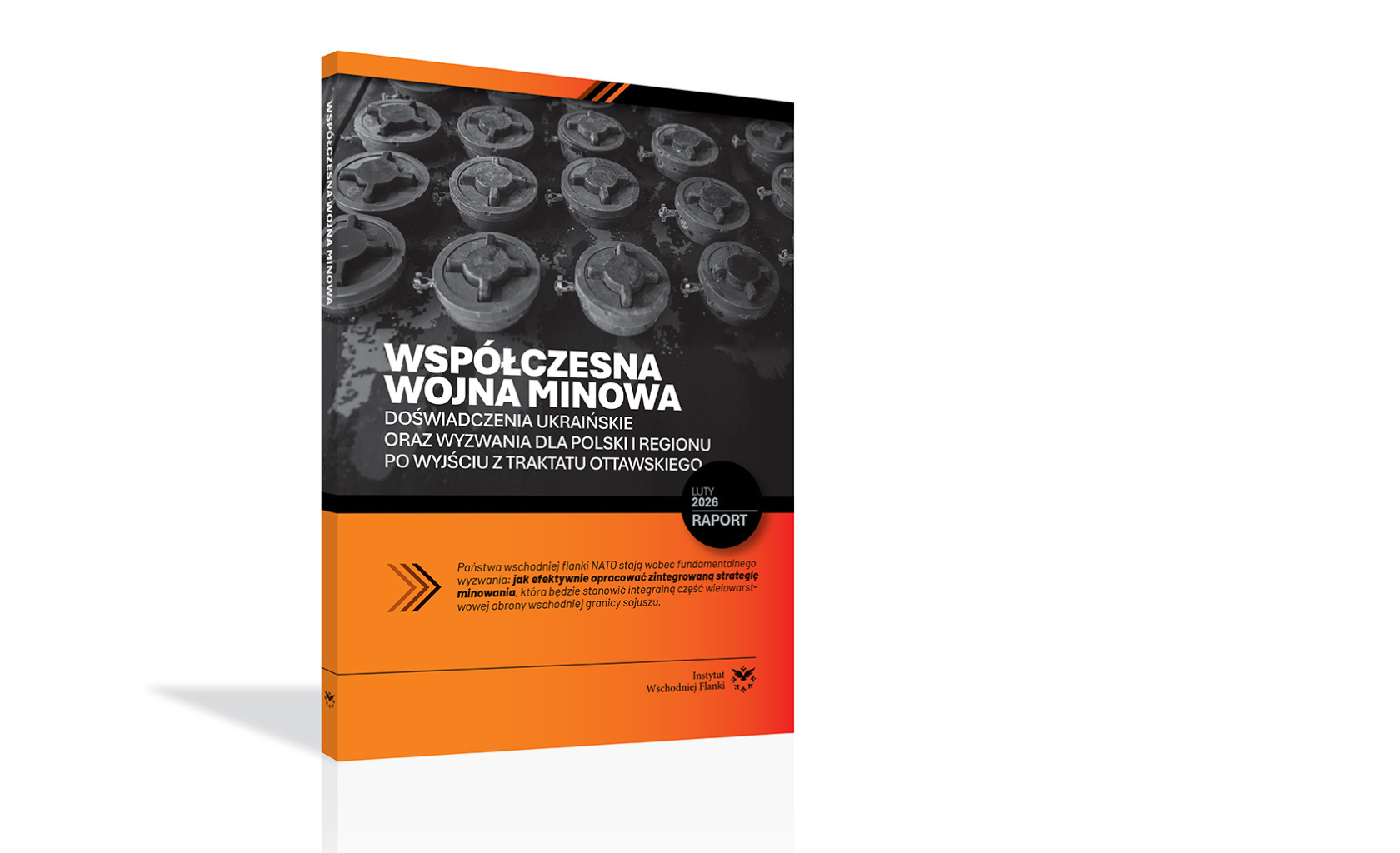

Poland’s withdrawal from the Ottawa Convention, which came into effect on February 20, 2026, represents a significant change in the legal conditions governing the functioning of the national defense system. In the context of a potential threat from a more numerous adversary, there is a need to develop a coherent and integrated strategy for the use of mine warfare as part of a multi-layered defense of the eastern border of the state.
The Eastern Flank Institute’s report entitled Contemporary Mine Warfare: Ukrainian Experiences and Challenges for Poland and the Region after Withdrawing from the Ottawa Treaty is a coherent and factual study prepared by a team of experts who, based on their own military experience (including in the Polish engineering forces), their observations of the Ukrainian front, and their work in business, have prepared recommendations for the Ministry of National Defense and other state institutions that can influence the rapid equipping of the Polish Armed Forces with the necessary means of combat.
An analysis of the modern battlefield indicates that properly designed and integrated mining systems-supported by reconnaissance, artillery, and unmanned platforms-are an effective tool for delaying enemy offensive actions. Solutions based on unmanned systems, enabling flexible and precise deployment of mining resources while maintaining a favorable cost-to-effectiveness ratio, are of particular importance.
The authors of the report indicate that the development of these capabilities requires, above all:
- acceleration of procedures for the procurement and testing of military equipment,
- expansion of domestic production capabilities,
- support for the development of unmanned systems,
- full integration of minefields with digital command and reconnaissance systems.
Executive summary of the report (in English):
We encourage you to read the report (full text in Polish):
